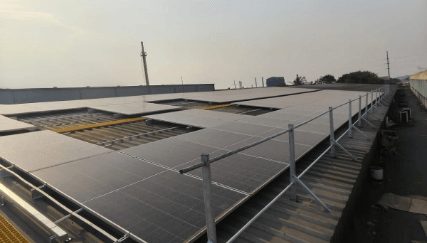
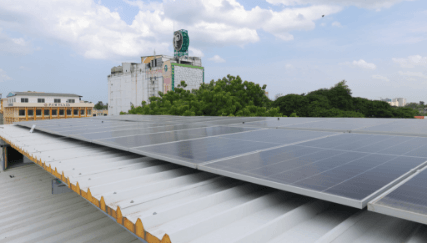
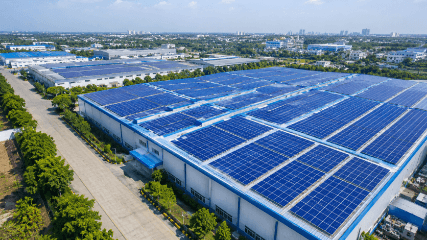
A solar power system is expected to serve your home for 25 to 30 years The lifespan of a solar system is not determined by the solar panels alone. It depends on the quality of the mounting structure, proper earthing, engineering standards, government approval support, after-sales service.
Unfortunately, many customers compare only the price and the brand of the solar panels, overlooking the below five critical factors. That is why many installations begin facing problems within first 5 to 10 years, even though the panels carry a 25-year warranty.
Because of poor engineering, inferior materials, and inadequate installation practices can reduce the reliability and safety of the entire solar system.
Recently, during a customer discussion, we were told that a neighbour had installed a similar solar system for nearly ₹50,000 less than our quotation.
Instead of simply defending our price, our engineering team visited the neighbouring installation to understand the difference.
The visit clearly explained where the cost savings came from, and why those savings could become expensive in the future.
Here are five important checkpoints every customer should verify before finalising a solar installation partner.
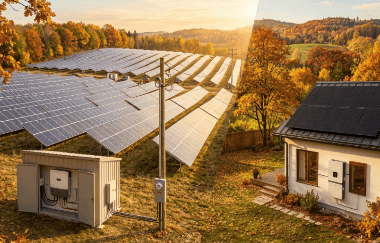
1. The Quality of the Mounting Structure
The solar panel is only as strong as the structure that supports it.
The mounting structure should be:
- Hot-dip galvanized with high zinc protection
- Non-corrosive
- Designed to withstand wind speeds up to 180 km/h
- Suitable for coastal areas like Chennai ,where rust and corrosion are common
One of the biggest differences between quality installations and low-cost installations lies in the protective coating used.
Many low-cost vendors use aluminium-coated structures to reduce costs. These may begin to deteriorate within a three years, especially in coastal environments.
A zinc-galvanized structure, on the other hand, can protect the installation for over 25 years.
The price difference can be around ₹20,000, making it difficult for quality-focused companies to compete on price. However, this additional investment protects the entire solar system throughout its life.
At Maruthi, every structure undergoes stringent quality checks because even a small corrosion point can eventually weaken the complete structure.
2. Proper Earthing Is a Safety Requirement
This is one of the most overlooked areas in residential solar installations.
In many installations across Chennai, we have observed that a single earthing connection is shared between:
- Solar panels
- Inverter
- Lightning arrester
Technically, this defeats the purpose of proper earthing.
As per good engineering practice, each of these should have:
- Separate earthing pits
- Independent earthing wires
Although customers may never notice this difference, it has a significant impact on safety, equipment protection, and long-term reliability.
Being a company founded by electrical engineering professionals, Maruthi follows separate earthing practices in every installation.
3. Installation Is Only Half the Job
Many customers assume that once the panels are installed, the project is complete.
In reality, the installation is only the beginning.
A reliable solar partner should support you with:
- Electricity Board (EB) documentation
- Approval process
- Net metering
- Government subsidy applications
- Coordination with government departments
- Guidance until the subsidy is credited
Even after installation, customers often have questions regarding:
- Net meter readings
- Subsidy status
- Electricity bills
- System performance
A responsible vendor should continue supporting customers long after the installation is complete.
At Maruthi, a dedicated engineering team assists customers throughout the entire process, even after years of installation
4. Post-Installation Support – Your Peace of Mind
Solar systems work every day for decades.
Naturally, customers may occasionally require technical assistance.
Questions may include:
- Why is there a power interruption?
- Why is the inverter showing an error?
- Why is battery backup not working?
- Is the hybrid system functioning correctly?
Quick technical support becomes extremely valuable during such situations.
At Maruthi, customers receive:
- 24×7 telephone technical support
- On-site service visits within 12 business hours (where applicable)
- Direct access to experienced engineers
The above is not just a promise , at Maruthi ,it’s a commitment we are keeping for the last thirty years
5. Your Partner Should Take Complete Responsibility
A solar system is an integration of multiple products:
- Solar panels
- Inverter
- Mounting structures
- Electrical wiring
- Protection devices
- Net metering
- EB approvals
Every component comes from a different manufacturer or vendors .
If something goes wrong, customers are often asked to contact different vendors, resulting in confusion and delays.
Instead, choose a company that acts as a single system integrator.
One point of contact means:
- Faster service
- Better coordination
- Clear accountability
- Complete peace of mind
At Maruthi, customers never have to coordinate between multiple suppliers. We manage every vendor and every service requirement on your behalf.
Summary :
When comparing quotations, don’t compare only the price.
Compare the engineering standards, installation quality, safety practices, after-sales support, and the long-term commitment of the company.
A solar system is expected to serve your family for the next 25 to 30 years.
Saving ₹20,000 or ₹50,000 today may appear attractive, but poor engineering can cost much more over the lifetime of the system.
Choose a partner who will stand with you,not just until the installation is complete, but throughout the life of your solar investment.
Quick Checklist Before Choosing a Solar Vendor
Evaluate long-term reliability—not just the lowest quotation.
Check whether the mounting structure is hot-dip galvanized with zinc coating.
Ensure the structure is designed to withstand up to 180 km/h wind speeds.
Ask whether the system is suitable for coastal and corrosion-prone areas.
Verify that separate earthing is provided for the panels, inverter, and lightning arrester.
Confirm that the vendor handles EB approvals, net metering, and subsidy documentation.
Ensure post-installation support is available for technical queries.
Ask about response time for service calls.
Check whether the company offers 24×7 telephone support.
Choose a vendor who provides a single point of contact for the complete system.